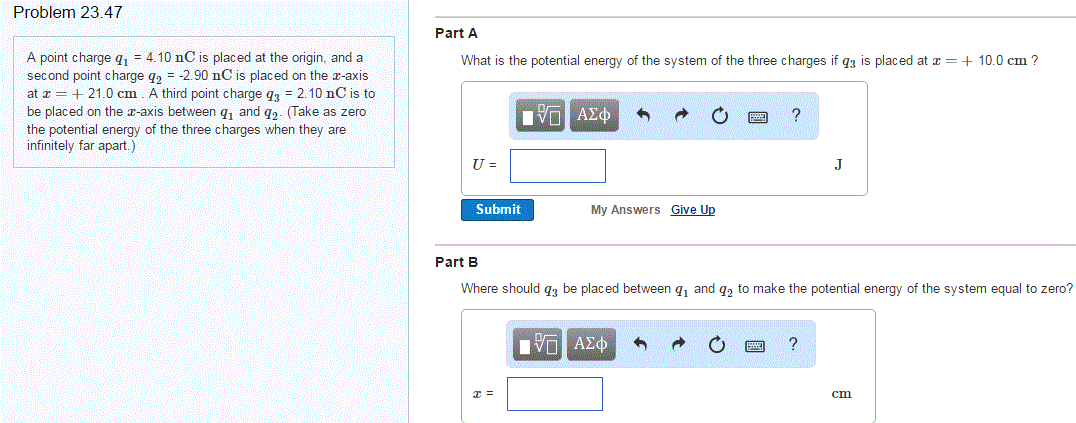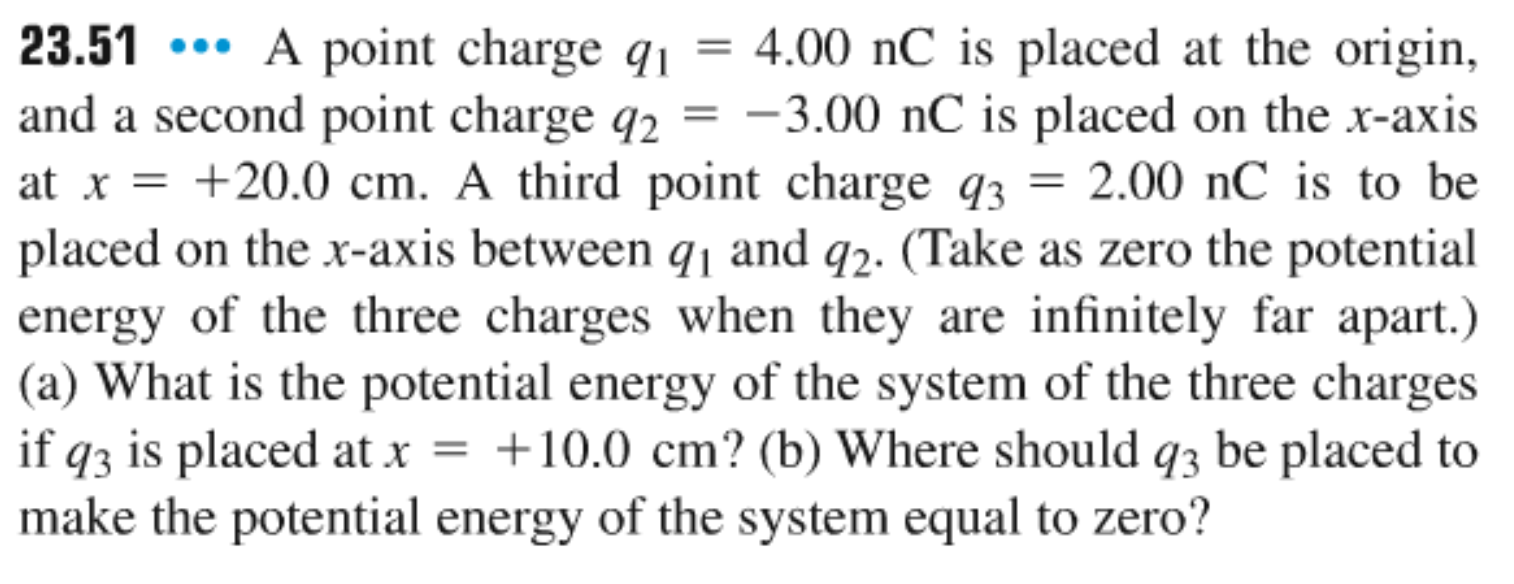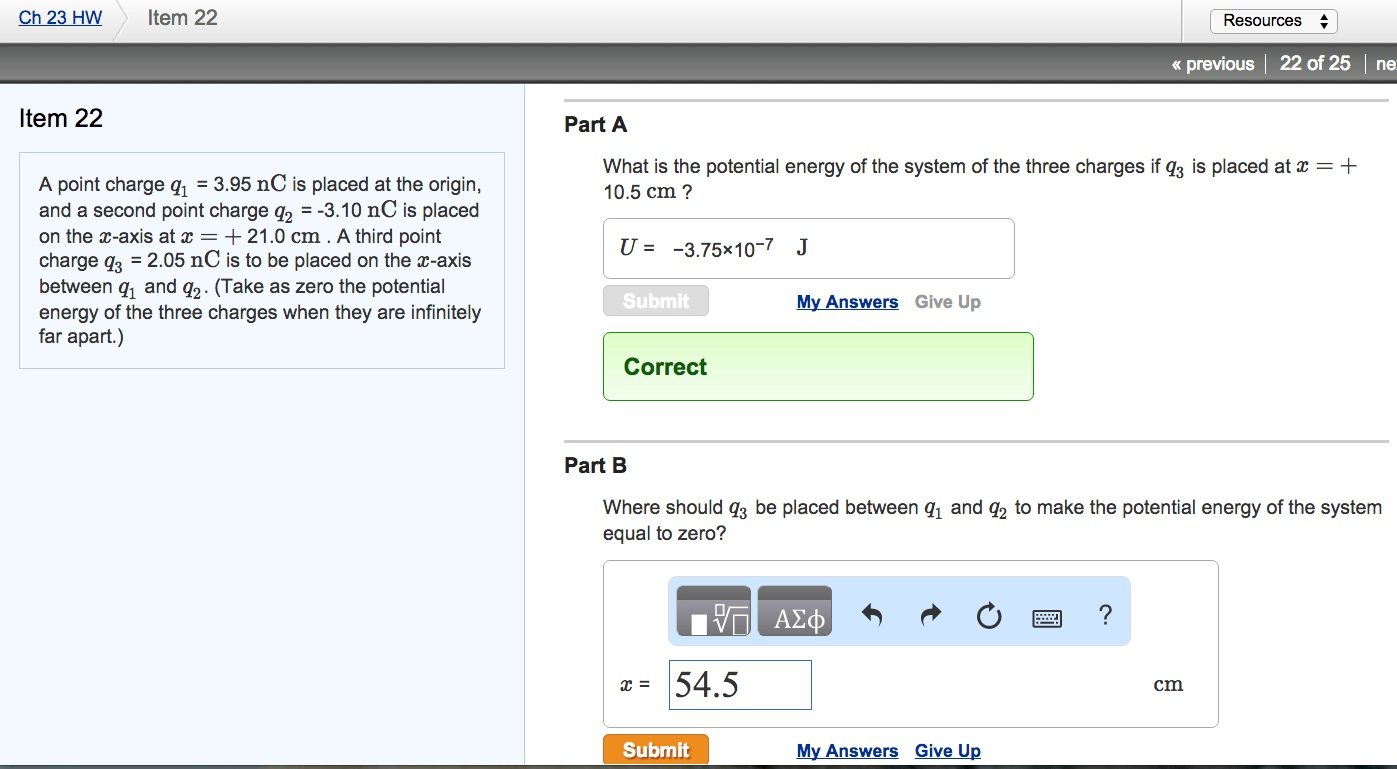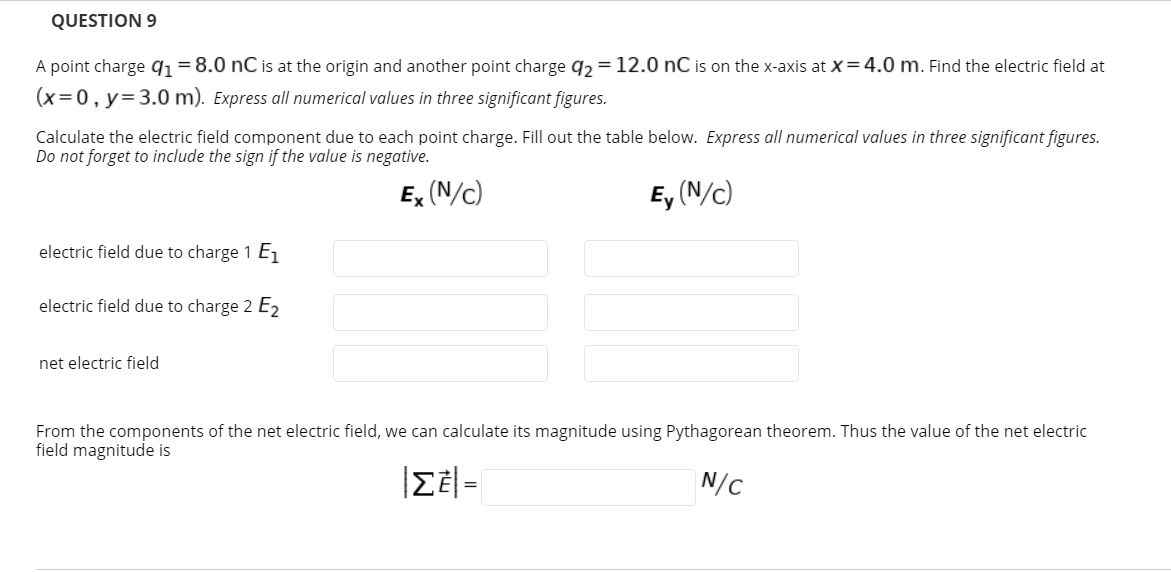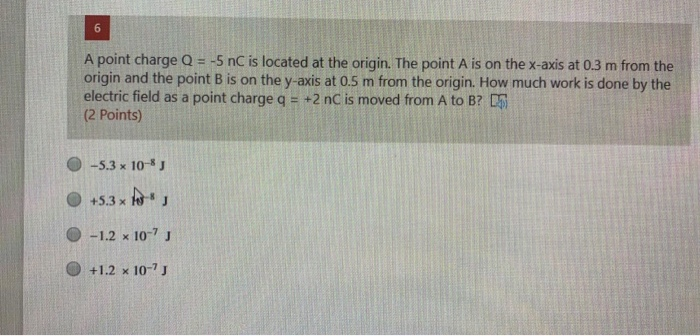
A Point Charge Q Nc Is Fixed At The Origin
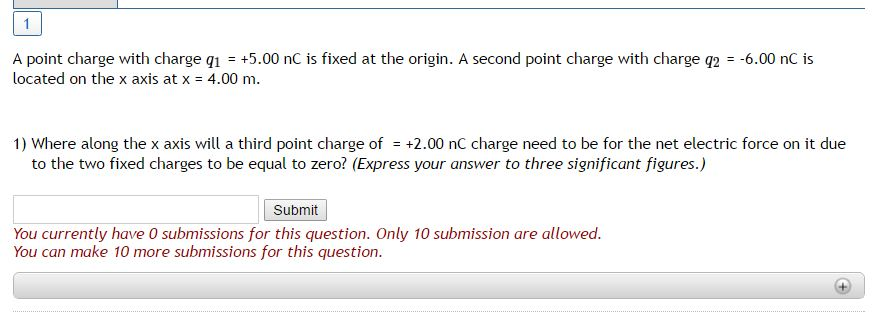
Hey there, curious minds! Ever wondered about the tiny building blocks of the universe, the real MVPs of electricity? Well, today we're diving into something super foundational, a concept that's actually at the heart of so much of what we experience every day. We're talking about a point charge Q, chilling out, completely fixed at the origin. Sounds a bit sci-fi, right? But stick with me, because it’s actually pretty fascinating.
So, what exactly is a "point charge"? Imagine the tiniest possible speck of electric stuff. Like, smaller than a dust mote, smaller than an atom, so small it has no size at all. That's our point charge! And this particular one, we're calling it Q. Think of it as a single, solitary little electric spark, or maybe a minuscule magnetic north pole, but with electric power. It's got this intrinsic property called electric charge.
And where is this little guy? It’s parked, fixed, right at the origin. You know, the zero point in a graph? That spot where the x, y, and z axes all meet. It's not going anywhere, just hanging out, like a VIP guest at a party who decided to claim a specific spot and stay put. This stillness is actually a big deal, as we'll see.
Must Read
Why is this so cool?
Okay, so we have this tiny, immobile electric charge. So what, right? Well, this seemingly simple setup is the foundation for understanding a whole bunch of electrical phenomena. It’s like learning the alphabet before you can write a novel. This point charge is our 'A', our fundamental unit of electric influence.
Think about it: everything that has an electric charge – from the electrons in your phone to the static cling on your sweater – can be thought of, in some way, as a collection of these point charges. Even complex electrical systems can be broken down into these fundamental building blocks for analysis. It’s a bit like how a whole city is made up of individual people, each with their own unique qualities.
The fact that it's fixed is also super important. If our point charge were zipping around, things would get way more complicated, way faster. Its fixed position means its electric influence is predictable and steady. It’s like having a lighthouse in a storm – a constant point of reference.

The Invisible Force Field
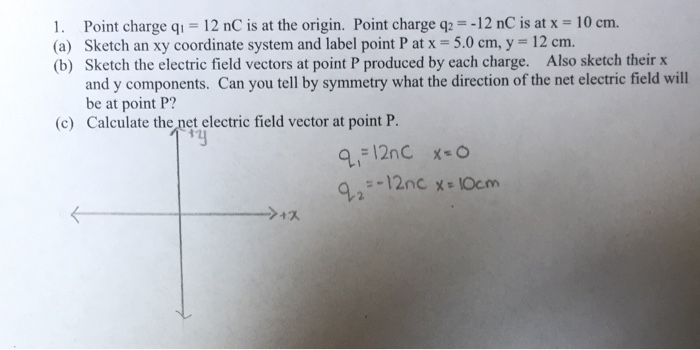
Now, here's where it gets really interesting. This point charge, Q, isn't just sitting there doing nothing. It's actively influencing the space around it. How? Through something called an electric field. Imagine it as an invisible aura, a sphere of influence radiating outwards from our point charge in every direction.
This electric field is like a silent announcement to anything else that has an electric charge: "Hey! I'm here, and I have an effect!" If you were to bring another little charged particle near our fixed Q, it would feel a push or a pull. If our Q is positive, it pushes other positive charges away and pulls negative charges in. If Q is negative, it's the opposite. It's like a tiny, invisible magnet, but for electric charges.
The strength of this electric field isn't the same everywhere. It's strongest right next to Q and gets weaker the further away you go. This makes perfect sense, doesn't it? The closer you are to something, the more you feel its presence. Think about how loud a concert is when you're front row versus way in the back. The influence diminishes with distance.
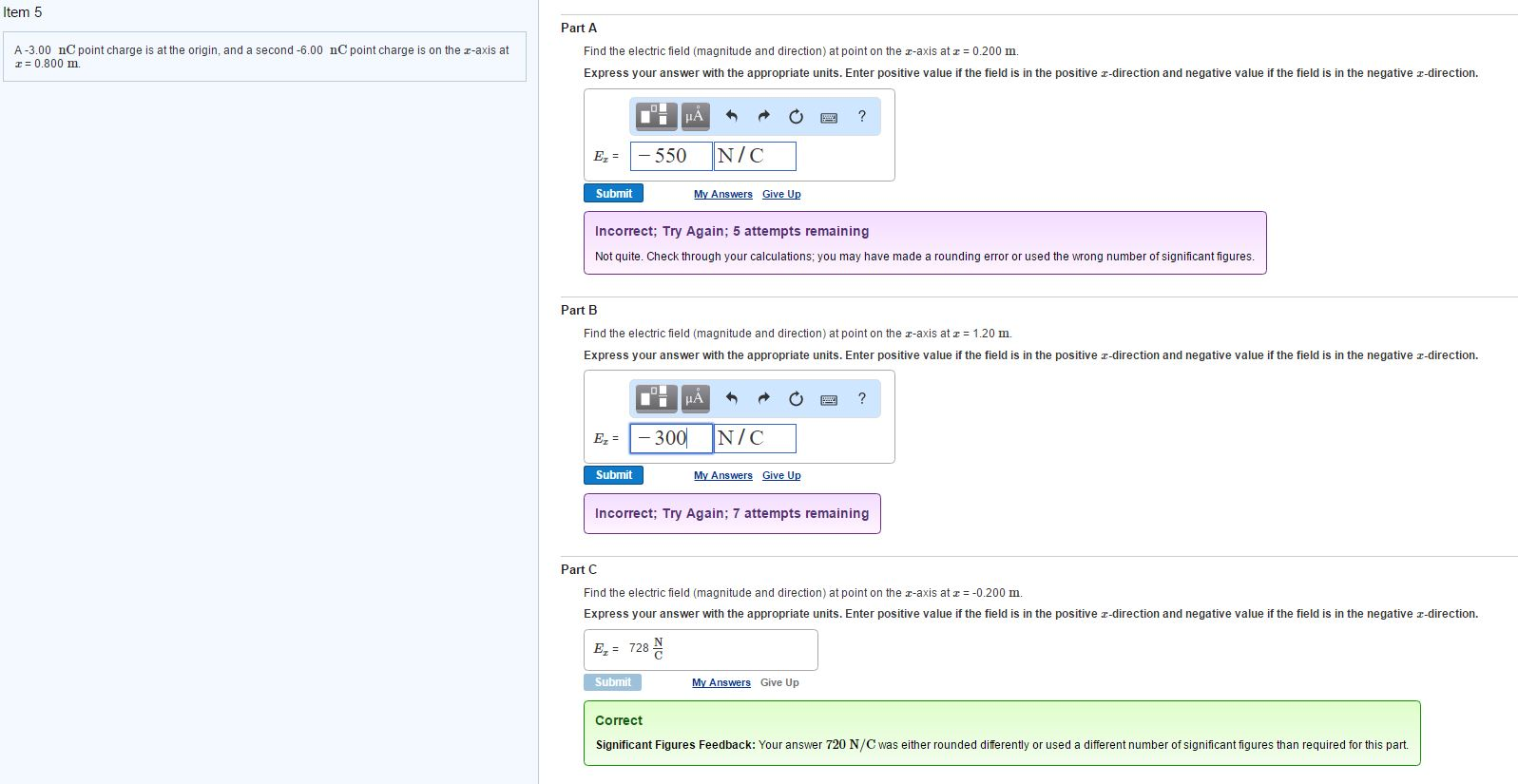
This relationship between the charge and the electric field it creates is described by a very famous equation called Coulomb's Law. It's the cosmic rulebook for how electric charges interact. It tells us exactly how strong that push or pull will be, and it all starts with our single, fixed point charge at the origin.
Analogy Time!
Let’s try a fun analogy. Imagine our point charge Q is like a tiny, super-bright LED bulb placed at the center of a dark room. This bulb emits light, and that light spreads out in all directions. The closer you are to the bulb, the brighter the light is. The further away you move, the dimmer it gets. The light itself is like the electric field – it’s the influence of the bulb (our charge) on the space around it.
Now, imagine you're holding a tiny mirror. If you bring that mirror close to the LED bulb, it will reflect a strong beam of light. If you move the mirror further away, the reflected beam will be much fainter. That mirror is like another charged object, experiencing the 'light' (the electric field) from our central bulb (the point charge).
Or, consider a single, perfectly still droplet of ink in a still pond. That droplet is our point charge. The ripples it creates, spreading outwards and influencing the water around it, are like the electric field. The closer you are to the initial droplet, the more the water is disturbed. As the ripples move away, they become less pronounced.
This fixed point charge is also the basis for understanding potential energy. If you want to move another charge towards our fixed Q, you have to do work against that electric field. It’s like pushing a magnet closer to another magnet – you feel resistance. That effort you exert is stored as potential energy. The point charge Q, by sitting there, creates a landscape of potential energy around it.
The Building Blocks of Everything Electric
So, why is this whole concept of a fixed point charge at the origin so darn important? Because it's the simplest possible scenario to understand the fundamental laws of electricity. Once you grasp how one single, stationary charge behaves and influences its surroundings, you can start to build up to more complex situations.
It’s like learning to stack single Lego bricks before you build an entire castle. This foundational understanding allows physicists and engineers to calculate forces, fields, and energies in all sorts of electrical devices. Your smartphone, the electric grid, medical imaging technology – all of it, at its core, relies on the principles that begin with understanding the behavior of a simple, fixed point charge.
The fact that it's at the origin simplifies things mathematically too. Many physics problems are easier to solve when there’s symmetry, and placing the charge at the origin often creates that nice, symmetrical setup. It’s a convenient starting point for building more intricate electrical puzzles.
So next time you flip a light switch, or use your computer, or even just feel a tiny static shock, take a moment to appreciate the humble point charge. That tiny, fixed speck of electric stuff at the origin is quietly playing a starring role in the grand theater of the universe, shaping the very forces that hold so much of our world together. Pretty cool, right?